
Looking For
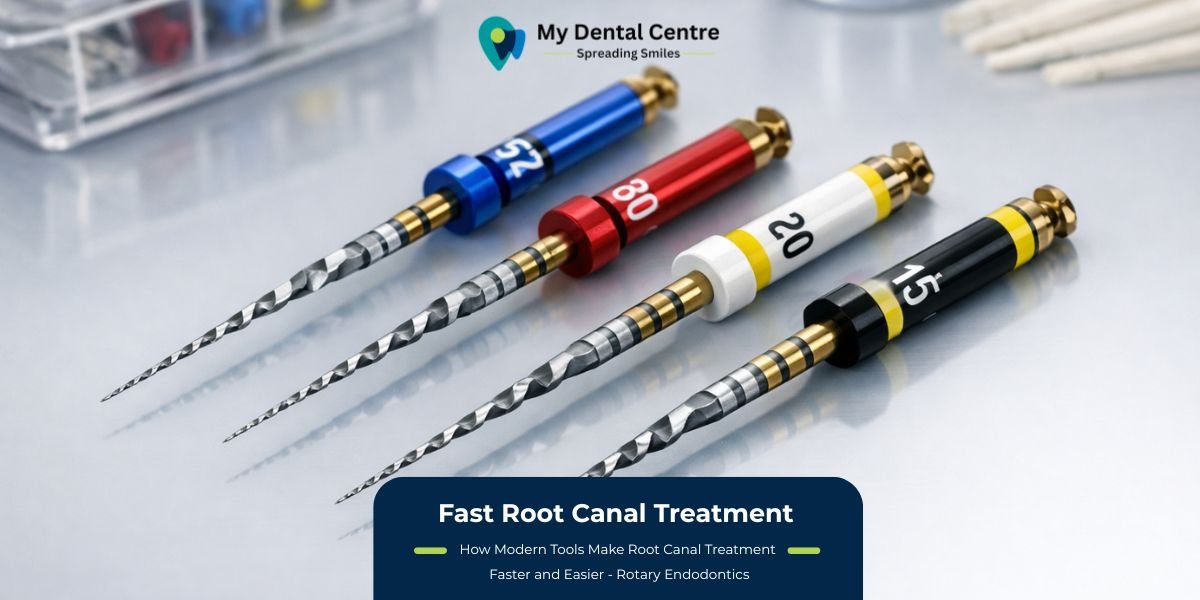
Rotary endodontics is a modern approach to root canal treatment that uses specialized engine-driven instruments to clean and shape canals more efficiently. This technology has revolutionized endodontics by making procedures faster, safer, and more comfortable for both patients and dentists.
These are engine-driven instruments made of specialized material NiTi (Nickel-Titanium). NiTi was developed by Buchler around 60 years ago.
In endodontics, commonly used NiTi alloys include:
- 55 NiTinol
- 60 NiTinol
The first use of NiTi in endodontics was reported around 1988 by Walia et al..
NiTi instruments have two key properties that make them perfect for root canal procedures:
- Superelasticity – allows flexibility within curved canals
- Shape Memory – enables the file to return to its original shape, resisting deformation
These properties make NiTi files resistant to fractures, which has made them a favorite choice for dentists over time.
- Efficient Cutting and Shaping:
NiTi systems have a constant taper, which distributes stress evenly along the file, resulting in more precise canal preparation. - Faster Biomechanical Preparation:
Before rotary files, dentists had to manually clean and shape canals using hand files—a time-consuming and exhausting process. - Patient and Dentist Comfort:
Engine-driven rotary files reduce treatment time, making the procedure less hectic and more comfortable for both the patient and the dentist. - Consistent and Predictable Results:
Modern rotary systems allow for precise shaping and cleaning, improving the overall success rate of root canal therapy.
Conclusion
Rotary endodontics has transformed traditional root canal therapy. By leveraging NiTi technology, it allows faster, safer, and more comfortable procedures while maintaining high precision. This modern approach reduces treatment time and enhances patient experience, making it the preferred method for contemporary endodontists.

It is fascinating how the shift toward NiTi instruments has transformed the patient experience by balancing precision with significant time savings. Focusing on the shape memory and superelasticity of these files really demystifies why modern root canal treatments are so much more efficient and predictable than older methods.
It’s fascinating to see how rotary endodontics has transformed root canal treatments, especially with the use of NiTi instruments that offer superelasticity and shape memory. These advancements not only make the procedure faster but also significantly reduce the risk of file fractures, which is a huge win for both dentists and patients. Thanks for highlighting the evolution of these tools and their impact on modern endodontic care.
Greetings! Very helpful advice on this article! It is the little changes that make the biggest changes. Thanks a lot for sharing!