
Looking For
Root Canal Treatment: Cost, Procedure, and Everything You Need to Know
Root canal treatment falls under the category of endodontic treatment. The term endodontic is derived from two Greek words — “endo” (inside) and “odont” (tooth) — which means treatment related to the inside of the tooth.
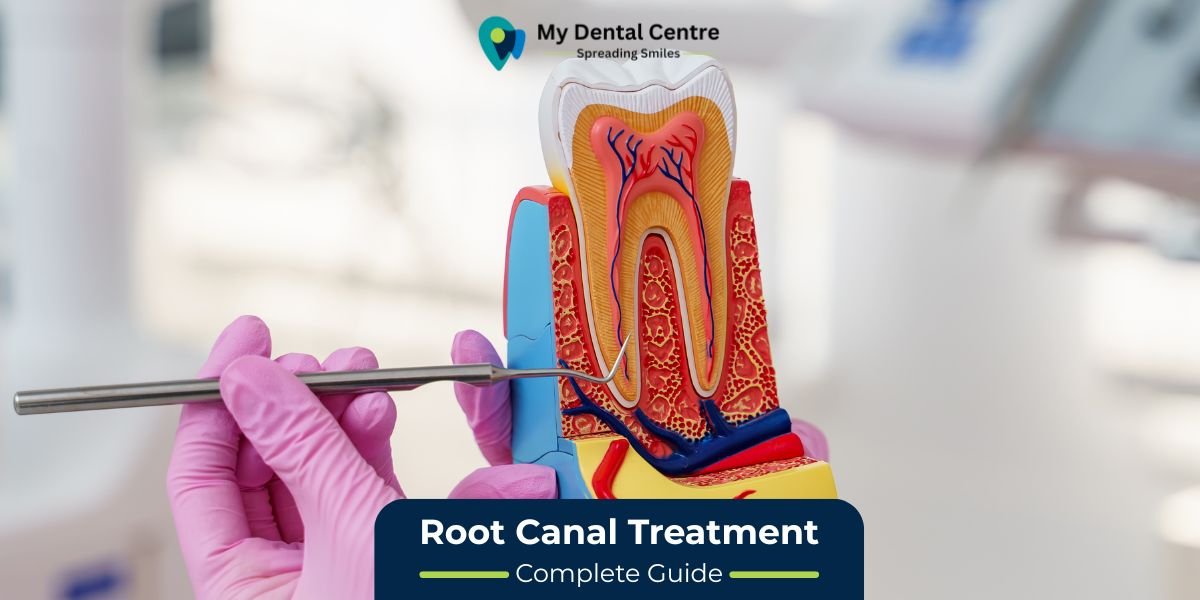
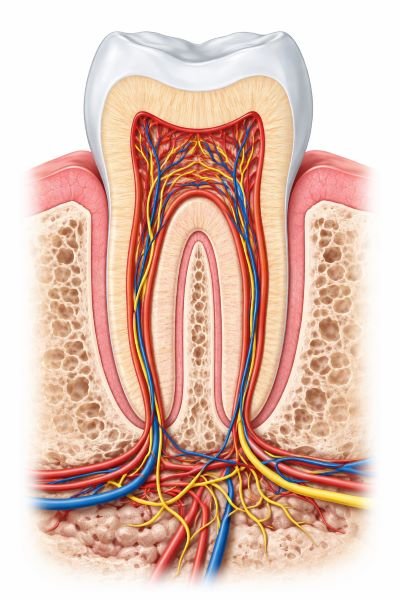
A tooth consists of multiple layers. The outermost white layer is called enamel, beneath which lies a hard layer known as dentin. Below the dentin is a soft tissue layer called the pulp.
What Is Dental Pulp Made Of?
The pulp is the living part of the tooth and is composed of:
Nerves
Blood vessels
Connective tissues
During tooth development, the pulp helps form the surrounding hard tissues. It extends from the crown of the tooth to the root canals. While pulp is essential for tooth growth, a fully developed tooth can survive without it, as it continues to receive nourishment from the surrounding tissues.
Why Is Root Canal Treatment Needed?
Root canal treatment is required when the pulp becomes inflamed or infected. Several factors can lead to pulp infection, including:
- Deep dental decay
- Repeated dental procedures on the same tooth
- Cracks or fractures in the tooth
- Injury or trauma to the tooth
If an infected pulp is left untreated, it can cause severe pain, lead to abscess formation, and may eventually result in tooth loss.
Common Symptoms That Indicate You May Need a Root Canal
You may require a root canal treatment if you experience one or more of the following symptoms:
- Pain while chewing or biting
- Pimples or swelling on the gums
- Cracked or chipped tooth
- Sensitivity to hot or cold that lingers
- Swollen or tender gums
- Darkening of the gums or severe tooth decay
Step-by-Step Procedure of Root Canal Treatment
1. Diagnosis and X-ray Examination
The dentist examines the affected tooth and takes X-rays to assess the extent of infection.
2. Local Anesthesia and Isolation
Local anesthesia is administered to numb the area. A protective sheet called a dental dam is placed to keep the tooth clean and free from saliva.
3. Access Opening
An opening is made in the crown of the tooth to reach the infected pulp.
The infected pulp is removed using fine instruments, and the pulp chamber and root canals are thoroughly cleaned.
5. Shaping the Canal
The canals are shaped to prepare them for filling.
6. Filling the Canal
The cleaned canal is filled with a rubber-like, biocompatible material called gutta-percha.
7. Sealing the Tooth
Adhesive cement is used to seal the gutta-percha securely in place.
8. Crown Placement
After the root canal, a dental crown is placed to restore the tooth’s strength and function. In some cases, a post may be inserted to support the crown.
Cost of Root Canal Treatment in India
The cost of root canal treatment in India typically ranges from ₹ 6,000 to ₹8,500 per tooth on average. The final cost depends on several factors, such as:
- Location of the dental clinic
- Experience of the dentist or endodontist
- Technology and facilities used
- Severity of the infection
FAQs
How Does Root Canal Treatment Work?
In root canal treatment, the infected pulp is removed, and the inside of the tooth is cleaned, shaped, and sealed. Once restored with a crown or filling, the treated tooth can function just like a natural tooth.
Aftercare Tips Following Root Canal Treatment
To ensure proper healing after a root canal, keep the following points in mind:
- Avoid chewing or biting with the treated tooth until it is fully restored
- Visit your dentist promptly to get a crown placed, as an unrestored tooth is prone to fractures
- Maintain good oral hygiene by brushing and flossing regularly
- In rare cases, pain may return months or years later, requiring retreatment
Is Root Canal Treatment Painful?
Thanks to modern anesthetics and advanced dental technology, root canal treatment is generally painless. In fact, the procedure is performed to relieve tooth pain caused by infection.
Some sensitivity or mild discomfort may occur for a few days after treatment, which can be managed with prescribed medication. However, if pain persists for an extended period, you should consult your dentist immediately.
Is Root Canal Treatment Painful?
Thanks to modern anesthetics and advanced dental technology, root canal treatment is generally painless. In fact, the procedure is performed to relieve tooth pain caused by infection.
Some sensitivity or mild discomfort may occur for a few days after treatment, which can be managed with prescribed medication. However, if pain persists for an extended period, you should consult your dentist immediately.
Conclusion
An infected tooth pulp can cause intense pain and serious complications if left untreated. Root canal treatment is a highly effective procedure that helps eliminate infection and save the natural tooth.
While there are rare cases where extraction becomes necessary, root canal treatment has a high success rate when performed by a skilled and experienced dentist. Temporary sensitivity after treatment is normal and usually subsides within a few days.
Ignoring a dental infection can allow it to spread to other parts of the body, potentially becoming life-threatening. Early diagnosis and timely treatment are essential for maintaining long-term oral and overall health.


The post provides a thorough yet easy-to-follow explanation of root canal treatment, covering causes, symptoms, the step-by-step procedure, aftercare, and cost details in one place. This level of clarity helps reduce fear and confusion for patients who may be anxious about the treatment. The reassuring tone, focus on pain management, and transparent cost range build trust and confidence
You are my breathing in, I possess few blogs and often run out from to post .