
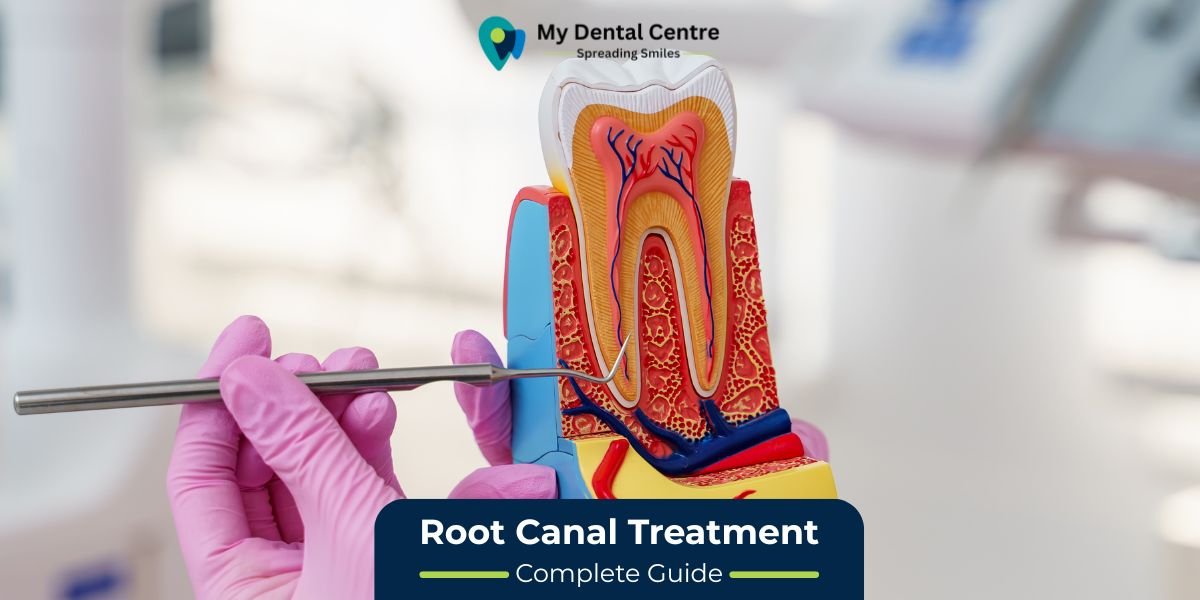
Root Canal Treatment: When It’s Needed, Why It Matters, and What to Expect - A Complete Guide
Root canal treatment is one of the most misunderstood dental procedures. For decades, it has been associated with pain, long appointments, and fear. But with today’s advancements in dentistry—modern anesthetics, better instruments, and enhanced imaging—root canal therapy has become a routine, comfortable, and highly successful procedure.
In reality, a root canal is designed to relieve pain, not cause it. It saves millions of teeth every year and prevents the need for extractions and more costly dental work.
This comprehensive guide explains everything you need to know about root canals, including signs, causes, the procedure, aftercare, benefits, and common myths.
Understanding the Anatomy: What Is Inside a Tooth?
To understand root canal therapy, it helps to know what’s inside your tooth. Each tooth has three main layers:
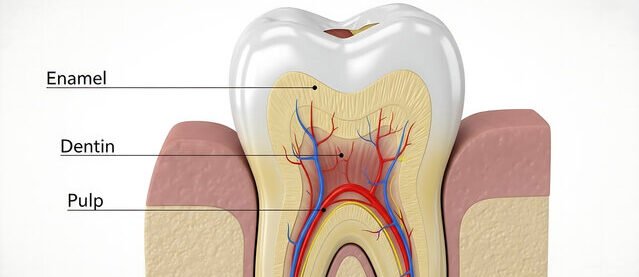
Enamel
Hard, outer protective layer.
Strongest substance in the human body.
Protects the inner layers from decay and damage.
Dentin
Yellowish, slightly softer layer beneath enamel.
Contains microscopic tubules that transmit sensations.
Can decay faster than enamel.
Pulp
The soft inner core.
Contains nerves, blood vessels, & connective tissue.
Responsible for the tooth’s nourishment during development.
Once the tooth is fully grown, the pulp becomes less essential, which is why the tooth can survive even after the pulp is removed during a root canal.
What Is a Root Canal Treatment?
A root canal is a dental procedure that removes infected or inflamed pulp from inside a tooth. During the procedure, the dentist:
- Removes the infected pulp
- Cleans and shapes the root canals
- Disinfects the space
- Fills it with a biocompatible material
- Seals the tooth to prevent reinfection
- Restores the tooth with a filling or a crown
The goal is to eliminate infection, preserve the natural tooth, and restore full chewing function.
Why Do You Need a Root Canal?
Root canals are performed when the pulp becomes infected or irreversibly damaged. This can happen for many reasons — some visible, others hidden.
Below are the most common causes.
Deep Tooth Decay
Untreated cavities progress through enamel and dentin; once decay reaches the pulp, bacterial invasion of the nerve space causes
- Sharp pain
- Infection
- Sensitivity
- Swelling
Cracked or Fractured Teeth
Cracks may occur from:
- Trauma
- Biting hard foods
- Teeth grinding
- Old fillings
Even hairline cracks can expose the pulp to bacteria, leading to infection and the need for a root canal.
Dental Trauma or Injury
A blow to the mouth (e.g., sports accident, fall, fight) can damage the pulp, even if the tooth looks normal externally. Trauma can lead to:- Pulp death
- Tooth discoloration
- Long-term infection
Repeated Dental Procedures
A tooth that has undergone multiple fillings or restorations may become irritated or inflamed, eventually causing pulp damage.
Large or Leak Fillings
Old fillings may deteriorate over time, allowing bacterial leakage that leads to pulp infection.




This website online is mostly a walk-by means of for all the information you needed about this and didn’t know who to ask. Glimpse right here, and also you’ll definitely discover it.
I believe this website has got some very good information for everyone : D.
Some really interesting information, well written and generally user friendly.
I love your blog.. very nice colors & theme. Did you create this website yourself or did you hire someone to do it for you? Plz reply as I’m looking to create my own blog and would like to find out where u got this from. thanks a lot
Thanx for the effort, keep up the good work Great work, I am going to start a small Blog Engine course work using your site I hope you enjoy blogging with the popular BlogEngine.net.Thethoughts you express are really awesome. Hope you will right some more posts.
This blog is definitely rather handy since I’m at the moment creating an internet floral website – although I am only starting out therefore it’s really fairly small, nothing like this site. Can link to a few of the posts here as they are quite. Thanks much. Zoey Olsen
Have you ever considered about including a little bit more than just your articles? I mean, what you say is important and everything. However think of if you added some great graphics or videos to give your posts more, “pop”! Your content is excellent but with images and video clips, this website could undeniably be one of the very best in its field. Terrific blog!
Hi my friend! I want to say that this article is amazing, nice written and include almost all significant infos. I’d like to see more posts like this.
Wow! This can be one particular of the most beneficial blogs We’ve ever arrive across on this subject. Actually Excellent. I’m also an expert in this topic therefore I can understand your hard work.
Very interesting information!Perfect just what I was searching for! “The right to be heard does not autmatically include the right to be taken seriously.” by Hubert Humphrey.
I went over this internet site and I believe you have a lot of fantastic information, saved to favorites (:.
Howdy! Do you know if they make any plugins to assist with Search Engine Optimization? I’m trying to get my blog to rank for some targeted keywords but I’m not seeing very good results. If you know of any please share. Cheers!
I have been exploring for a little for any high quality articles or blog posts on this kind of area . Exploring in Yahoo I at last stumbled upon this web site. Reading this information So i am happy to convey that I’ve an incredibly good uncanny feeling I discovered just what I needed. I most certainly will make sure to don’t forget this web site and give it a glance regularly.
Hey! This is my first visit to your blog! We are a group of volunteers and starting a new initiative in a community in the same niche. Your blog provided us valuable information to work on. You have done a wonderful job!
Howdy! Do you know if they make any plugins to assist with SEO? I’m trying to get my blog to rank for some targeted keywords but I’m not seeing very good results. If you know of any please share. Thanks!
This blog offers a clear, reassuring, and patient-focused explanation of root canal treatment that helps remove the fear and confusion many people have about RCT. Each section is well-structured and explains the symptoms, procedure, and benefits in a very easy-to-understand way, especially for first-time patients.
I’ve read similar educational articles where the focus was on how modern root canal treatment is painless, tooth-saving, and essential for long-term oral health—and this blog reflects that same trustworthy and informative approach. It not only explains the science behind RCT but also builds confidence for patients who are hesitant about the procedure. Truly a helpful and well-written guide.
You could definitely see your expertise in the work you write. The sector hopes for even more passionate writers like you who aren’t afraid to mention how they believe. At all times go after your heart. “Experience is a good school, but the fees are high.” by Heinrich Heine.
Aw, this was a really nice post. In idea I wish to put in writing like this moreover – taking time and precise effort to make a very good article… however what can I say… I procrastinate alot and in no way seem to get something done.
I have recently started a blog, the information you provide on this site has helped me tremendously. Thank you for all of your time & work.
Absolutely composed articles, appreciate it for information .